We are now accepting new patients | Find out more >>
Visit us: 20 Oswald Road, Oswestry, Shropshire, SY11 1RE
Call us: 01691 652424

Jul 29, 2026
What Actually Happens When You Have a Dental Implant? A Step-by-Step Guide
For many patients, the idea of having a dental implant sounds much more intimidating than the reality.
Often, the anxiety comes from simply not knowing what is going to happen.
So rather than using complicated dental terminology, let’s walk through the process from beginning to end.

Step 1: We start with a conversation
Before we talk about scans or surgery, we want to understand the problem.
Why are you considering an implant?
Perhaps you have recently lost a tooth.
Maybe a tooth has been repeatedly causing problems and can no longer be saved.
You might have had a gap for years.
Or perhaps you are struggling with a loose denture.
These situations may all potentially be helped by implants, but they don’t necessarily require the same treatment.
Step 2: We assess your mouth
Next, we examine your teeth, gums, bite and the area where the tooth or teeth are missing.
Your gum health is particularly important.
Implants need healthy supporting tissues, so if there is active gum disease or another dental problem, we may recommend dealing with this first.

Step 3: X-rays and scans
We need to understand what is happening underneath the gum.
Dental imaging helps us assess the bone and surrounding structures.
Depending on the proposed treatment, further three-dimensional imaging may sometimes be required.
Careful planning at this stage is extremely important.
Implant dentistry isn’t simply about putting an implant where a tooth used to be.
We need to think about where the final tooth needs to be and plan the implant appropriately to support it.
Step 4: Your treatment plan
Once we have gathered the necessary information, we can discuss your options.
This should include:
- what treatment we recommend;
- why we recommend it;
- alternative treatments;
- the stages involved;
- expected timescales;
- potential risks and limitations;
- maintenance requirements; and
- the likely costs.
This is also your opportunity to ask questions.
You shouldn’t feel rushed into making a decision.
Step 5: Implant placement
If you decide to proceed, the implant is placed into the jawbone.
Local anaesthetic is used to make the area numb, just as it would be for many other dental procedures.
The implant is carefully positioned within the bone according to the treatment plan.
The area is then allowed to heal.
Patients are often surprised by how manageable this stage is.
As with any surgical dental treatment, some soreness or swelling afterwards can occur, and we will give you appropriate aftercare instructions.
Step 6: Healing
This is the part that sometimes surprises people.
We don’t necessarily put the final tooth onto the implant immediately.
The implant usually needs time to become stable within the surrounding bone.
The exact healing period varies according to the clinical situation.
During your treatment planning, we’ll explain what you can expect and whether you will need a temporary replacement tooth during this period.
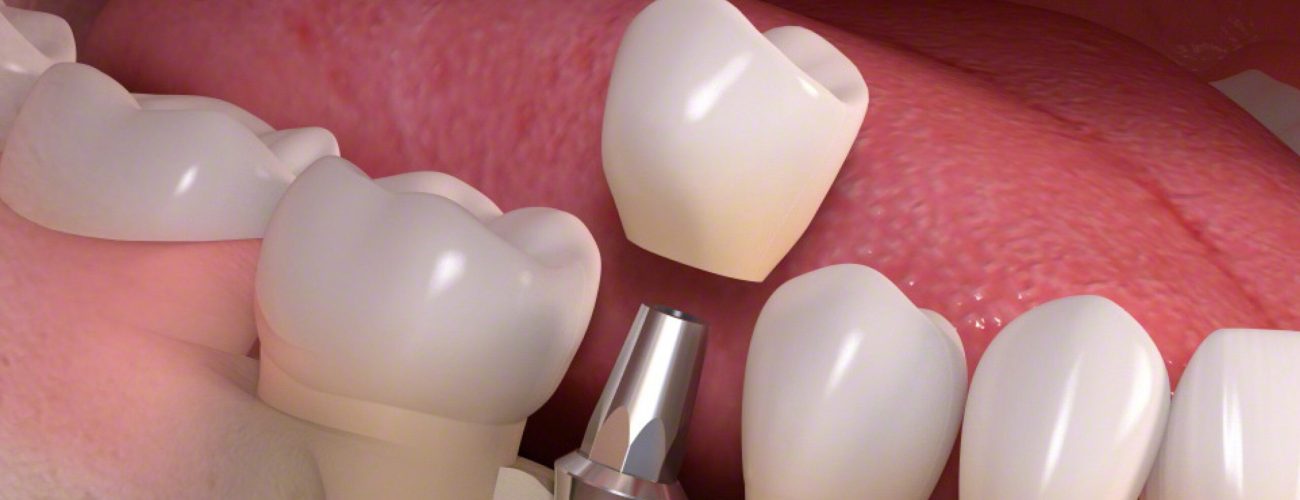
Step 7: Creating your new tooth
Once everything is ready, we can move onto the restorative stage.
Scans or impressions are taken so the replacement tooth can be carefully designed.
The aim isn’t simply to fill a gap.
We want the tooth to work with your bite and look appropriate alongside your other teeth.
Step 8: Fitting the final restoration
The final crown, bridge or other restoration is attached to the implant.
We check its appearance, fit and bite.
For many patients, this is the exciting stage – the gap they may have lived with for months or even years finally has a replacement.
But treatment doesn’t quite finish here.
Step 9: Looking after your implant
One of the biggest misconceptions about implants is that once they are fitted you can forget about them.
Unfortunately, that isn’t true.
Although implants cannot develop tooth decay, plaque can still build up around them.
If this isn’t controlled, inflammation can develop in the tissues supporting the implant.
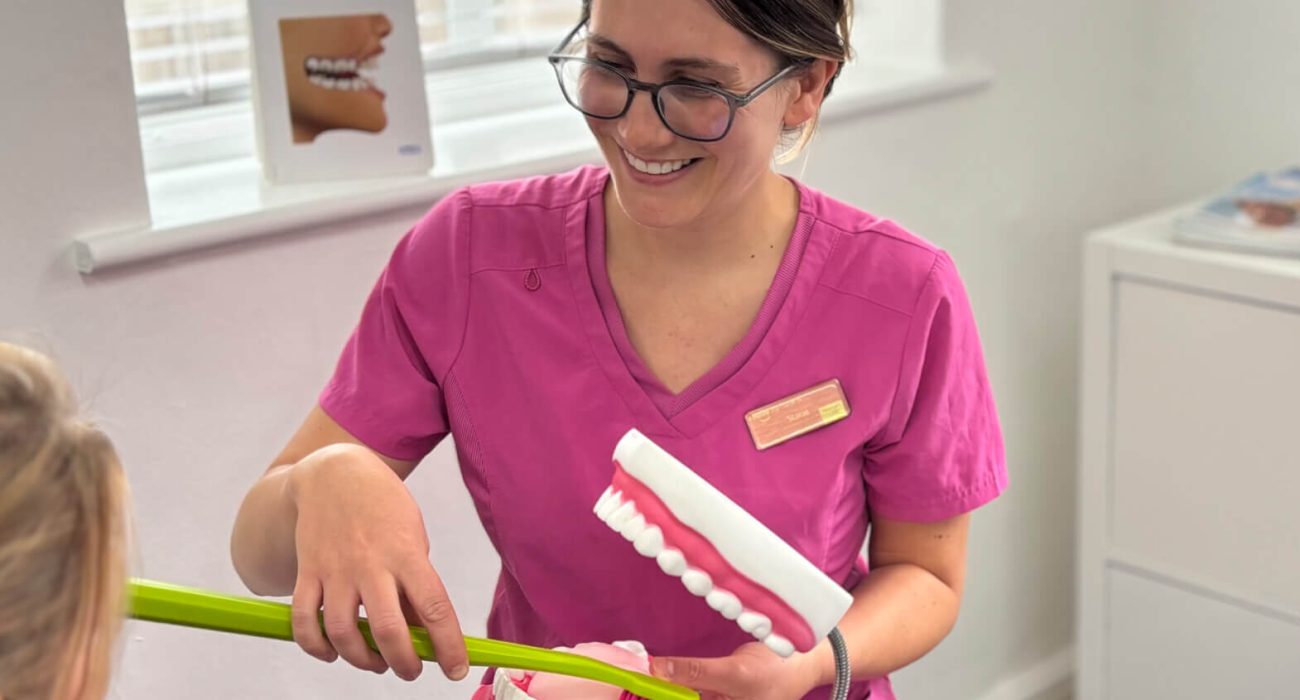
Good brushing, cleaning between the teeth and implants, and regular professional maintenance are extremely important.
At Oswyn House, our prevention and hygiene team can help you learn the best way to maintain your implant.
Does having a dental implant hurt?
This is understandably one of the first questions patients ask.
The implant placement itself is normally carried out with local anaesthetic so the area is numb.
Some discomfort, swelling or bruising can occur afterwards, as you would expect following a surgical procedure, but we’ll explain how to manage this and what to look out for.
If you are particularly anxious about dental treatment, tell us.
Dental anxiety is extremely common and discussing it beforehand allows the dental team to consider how best to support you.
How long does the whole process take?
Implant dentistry usually isn’t a one-appointment treatment.
There are assessment, planning, treatment and healing stages.
The overall timescale depends on factors including the condition of the tooth, the available bone, healing and the type of restoration being provided.
Rather than promising every patient the same timescale, we prefer to give you a realistic estimate after assessing your individual situation.
Is it worth it?
That’s a decision only you can make.
For the right patient, dental implants can provide an excellent way of replacing missing teeth.
But they require an investment of time, money and ongoing maintenance.
Our role is to explain the benefits, risks and alternatives clearly enough for you to decide whether that investment is right for you.
Considering a dental implant in Oswestry?
If you have a missing tooth, are facing the loss of a tooth or would simply like to understand whether dental implants might be suitable for you, we’re happy to discuss your options.
At Oswyn House Dental Practice in Oswestry, your first step is an assessment and a conversation — not a commitment to treat.

Written or reviewed by Jabbar Hussain.
Dentist with over 20 years’ experience in high-end general and cosmetic dentistry.
Articles you may be interested in
September 30 2026
Thumb Sucking and Dummies: How Can They Affect Your Child’s Teeth?
A simple guide for parents from Oswyn House Dental Practice. Thumb sucking and dummy use...
Continue reading
September 23 2026
Welcoming Dr Ashley Peile to Oswyn House
We’re pleased to welcome Dr Ashley Peile to Oswyn House Dental Practice. Ashley’s work is...
Continue reading
September 16 2026
Root Canal or Extraction: Which Options Should I Consider?
I had a conversation with a patient recently that I’ve had many times during my...
Continue reading