We are now accepting new patients | Find out more >>
Visit us: 20 Oswald Road, Oswestry, Shropshire, SY11 1RE
Call us: 01691 652424

Jun 10, 2026
HbA1c and Your Teeth: The Two-Way Street Nobody Tells You About
If you’ve ever had a blood test that included HbA1c, you’ll know it’s the number used to judge how well-controlled your blood sugar has been over the last two to three months.
It’s a cornerstone of diabetes diagnosis and management.
What most people don’t realise is that this same number is closely tied to what’s happening in your mouth – and that the relationship runs in both directions.
This isn’t a minor footnote in dental research. It’s one of the better-established links between a general health marker and oral health, and it’s one dentists are increasingly expected to talk to patients about.
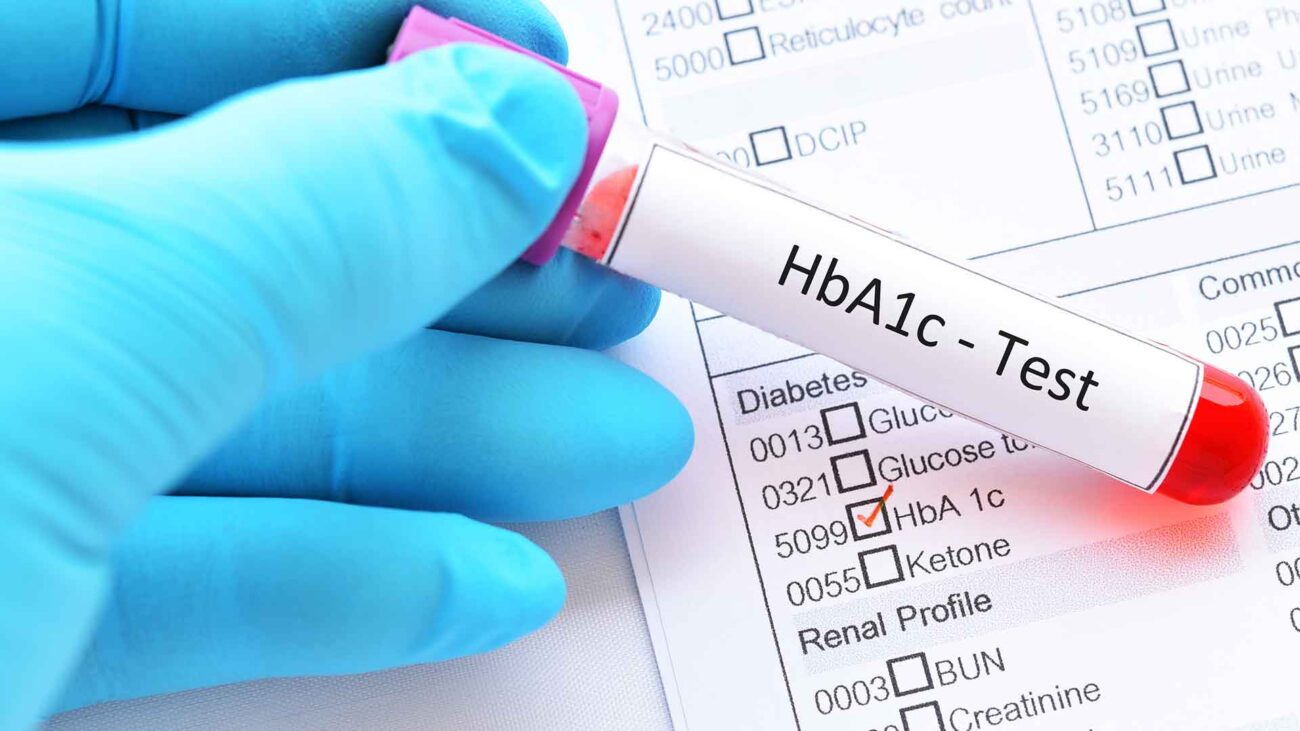
What HbA1c actually measures
HbA1c (glycated haemoglobin) reflects the average amount of sugar that’s been circulating in your blood over the past few months.
It’s expressed either as a percentage or in mmol/mol, and it’s the main tool doctors use to diagnose diabetes and monitor how well it’s being managed.
A healthy, non-diabetic range sits below 42 mmol/mol (6.0%); above that, you move into pre-diabetes and then diabetes territory.
Crucially, this isn’t just a diabetes number.
Even modest elevations, well before a formal diagnosis, are enough to affect how your gums respond to the everyday bacteria that live in every mouth.
Why high blood sugar is bad news for gums
Persistently raised blood sugar changes the environment inside your mouth in several ways.
It weakens the function of the white blood cells that normally fight off the bacteria in dental plaque, which makes it harder for the body to keep the usual low-level bacterial challenge in check. It also promotes a more inflammatory state throughout the body generally, and gum tissue is particularly sensitive to that.
The result, well documented across many studies, is that people with poorly controlled blood sugar tend to develop more severe gum disease, and it tends to progress faster than in people with normal levels.
This is why periodontitis has sometimes been called a complication of diabetes in the same breath as retinopathy or neuropathy – it isn’t an unrelated coincidence, it’s a direct consequence of the same underlying process.
The surprising part: it runs the other way too
Here’s the piece that tends to surprise people.
It isn’t just that high blood sugar damages gums – treating gum disease appears to genuinely improve blood sugar control.
Gum disease is a chronic infection, and chronic infection anywhere in the body increases insulin resistance, making it harder for the body to manage glucose effectively.
When that infection is treated – through a course of professional gum treatment (scaling and root surface therapy) – inflammation drops, and several well-conducted studies and reviews have found a measurable knock-on improvement in HbA1c.
The typical reduction reported is modest but clinically meaningful, broadly comparable to what you’d expect from adding another medication to a diabetes treatment plan.
It’s genuinely one of the few places where a dental treatment shows up as a measurable improvement in a separate area of general health.
What this means for you, practically
If you have diabetes or pre-diabetes: your dental check-ups matter more, not less.
Gum disease can progress faster and more severely, so more frequent hygiene visits are often appropriate, and it’s worth telling your dentist your most recent HbA1c reading so we understand the full picture.
If you have bleeding gums, gums that feel puffy or sore, or persistent bad breath: these are classic early warning signs of gum disease, and they’re worth investigating regardless of your diabetes status.
If you haven’t had blood sugar checked recently, unexplained gum problems are sometimes what prompts that conversation with your GP in the first place.
If you’re already managing diabetes carefully: know that keeping on top of your gum health isn’t a side project – it’s part of the same effort.
Treating gum disease properly can be a genuine, if modest, lever on your overall glycaemic control, alongside diet, medication, and activity.
Watch for dry mouth. It’s a common feature of poorly controlled blood sugar, and a dry mouth loses much of its natural protection against decay and gum disease. If your mouth regularly feels dry, mention it to us.
The bigger picture
Dentistry has moved a long way from being purely about teeth in isolation.
The mouth is genuinely connected to the rest of the body, and the diabetes–gum disease relationship is one of the clearest examples we have. Managing one side well tends to help the other.
If you have diabetes, pre-diabetes, or a family history of either, it’s worth making sure your dental team knows.
At Oswyn House Dental Practice, we’re happy to tailor your recall frequency and hygiene care around that picture – get in touch if you’d like to talk it through.
Written or reviewed by Jabbar Hussain.
Dentist with over 20 years’ experience in high-end general and cosmetic dentistry.

Articles you may be interested in
September 23 2026
Welcoming Dr Ashley Peile to Oswyn House
We’re pleased to welcome Dr Ashley Peile to Oswyn House Dental Practice. Ashley’s work is...
Continue reading
September 16 2026
Root Canal or Extraction: Which Options Should I Consider?
I had a conversation with a patient recently that I’ve had many times during my...
Continue reading
September 9 2026
Root Canal Treatment: Does It Really Hurt?
I had a patient come to see me recently with a very painful tooth. It...
Continue reading