We are now accepting new patients | Find out more >>
Visit us: 20 Oswald Road, Oswestry, Shropshire, SY11 1RE
Call us: 01691 652424

Aug 26, 2026
Bad Breath That Won’t Go Away: Causes & When to See a Dentist
Bad breath is one of those things patients often mention almost apologetically, right at the end of an appointment, as if it’s a minor embarrassment rather than a genuine dental symptom.
It isn’t minor, and it isn’t something you have to just manage with mints and mouthwash indefinitely.
Persistent bad breath – also called halitosis – almost always has an identifiable cause, and in most cases it’s one we can treat.
In fact, it’s thought to be one of the most common reasons people book a dental appointment in the first place.
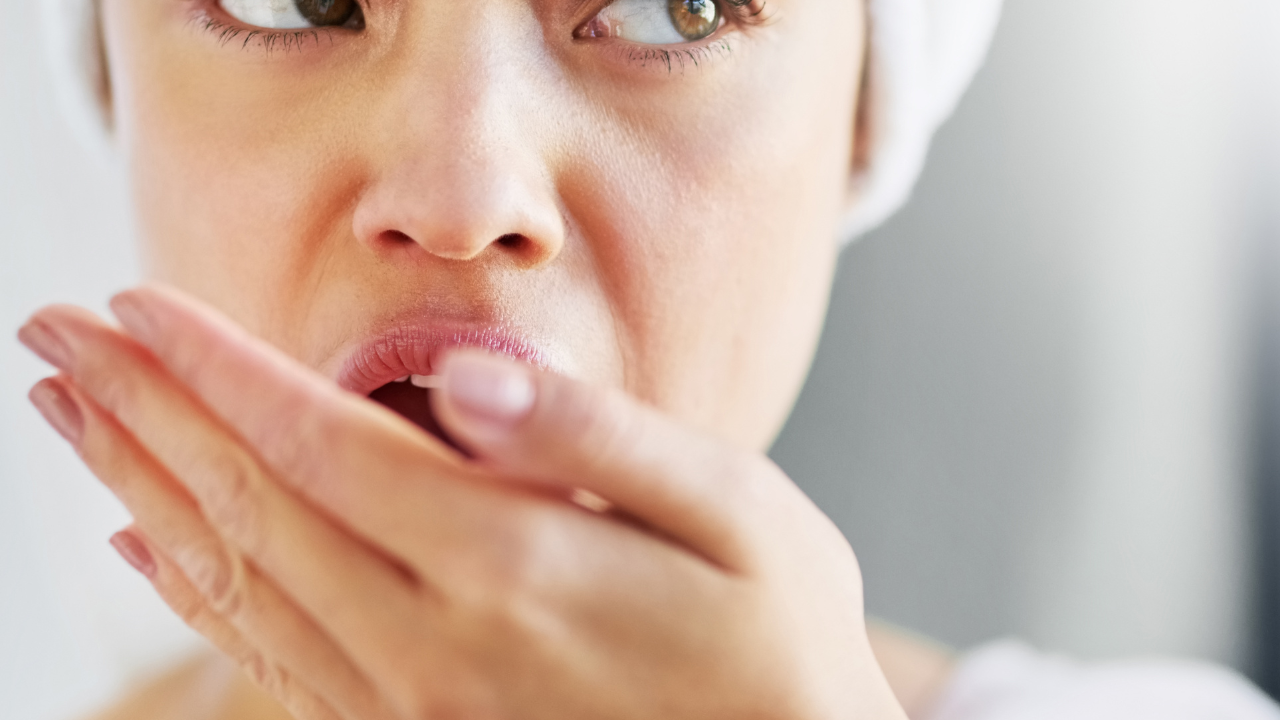
What Causes Bad Breath?
The most common causes we see are:
- Eating or drinking strong-smelling or spicy foods and drinks – garlic, onions, coffee, and alcohol are the usual suspects.
- Problems with your teeth or gums, including gum disease, cavities (holes in your teeth), or an infection.
- Fasting or crash dieting, which changes the chemicals your body produces and can affect breath.
- A dry mouth, whether from mouth breathing, certain medications, dehydration, or simply the natural drop in saliva flow overnight.
- Other medical conditions, such as tonsillitis or acid reflux.
- Smoking, which affects breath directly and also increases your risk of gum disease.
The overwhelming majority of cases – around 85-90% – originate in the mouth itself, and the single biggest contributor is bacteria coating the back of the tongue.
That area is naturally dry, hard to clean, and a comfortable home for the bacteria that break down leftover proteins and dead cells into the sulphur compounds responsible for the smell.
Far less commonly, the odour originates in the nose, sinuses, or tonsils, and genuine digestive causes are rarer still, despite being the explanation most people jump to.
Saliva is a big part of why bad breath fluctuates through the day.
It has natural antibacterial properties and physically washes bacteria off the teeth and tongue, so breath is almost always at its worst when saliva flow is lowest – first thing in the morning, during a long gap without food or drink, or in anyone with a persistently dry mouth.
What You Can Try First
A few genuinely effective habits are worth trying before assuming anything more serious is going on:
Do:
- Brush your teeth and gums gently for two minutes, at least twice a day, using a fluoride toothpaste.
- Clean your tongue once or twice a day, focusing on the back where most odour-causing bacteria sit. A dedicated tongue scraper does this more effectively and more comfortably than a toothbrush, which tends to just spread bacteria around and can trigger gagging.
- Clean between your teeth daily with interdental brushes or floss – unscented floss can be useful here, since it lets you notice which specific gaps are producing an odour, so you know where to focus.
- Keep up with regular dental check-ups.
- Keep dentures clean, and soak them overnight in an antiseptic denture-cleaning solution rather than plain water.
- Use sugar-free mints or gum after strong-smelling food or drink.
- Try an antibacterial mouthwash or toothpaste.
Don’t:
- Smoke.
- Drink too much alcohol.
- Rinse your mouth with water immediately after brushing (it washes away the protective fluoride).
- Eat lots of sugary food and drink.
- Brush so hard that your gums or tongue bleed.
When to See a Dentist
It’s worth booking in if you have any of the following:
- Bad breath that doesn’t go away after a few weeks of trying the steps above.
- Painful, bleeding, or swollen gums.
- Toothache or a wobbly adult tooth.
- Problems with your dentures.
If any of these apply, it’s a sign the underlying cause needs treating rather than managing, and the earlier we see it, the simpler and more straightforward that treatment usually is.
How We Diagnose and Treat It
At your appointment, we’ll examine your teeth and gums for decay, gum disease, and any restorations or dentures that might be trapping bacteria, and we’ll ask about habits or medical factors – such as dry mouth or smoking – that could be contributing.
Treatment follows the cause: this might mean a thorough hygiene appointment to remove plaque and tartar below the gumline, treating any decay we find, replacing an old filling, or adjusting a denture that isn’t fitting well.
Where the cause looks like it sits outside the mouth – for example, ongoing acid reflux or tonsillitis – we’ll point you toward your GP.
Bad breath is a symptom, not something you have to live with – once we know what’s driving it, it’s usually straightforward to resolve.
Ready to get to the bottom of it?
Book an appointment online or call us on 01691 652424 – we’re at 20 Oswald Road, Oswestry, and currently welcoming new patients.

*Written or reviewed by Jabbar Hussain. Dentist with over 20 years’ experience in high-end general and cosmetic dentistry.*
Articles you may be interested in
September 23 2026
Welcoming Dr Ashley Peile to Oswyn House
We’re pleased to welcome Dr Ashley Peile to Oswyn House Dental Practice. Ashley’s work is...
Continue reading
September 16 2026
Root Canal or Extraction: Which Options Should I Consider?
I had a conversation with a patient recently that I’ve had many times during my...
Continue reading
September 9 2026
Root Canal Treatment: Does It Really Hurt?
I had a patient come to see me recently with a very painful tooth. It...
Continue reading