We are now accepting new patients | Find out more >>
Visit us: 20 Oswald Road, Oswestry, Shropshire, SY11 1RE
Call us: 01691 652424

Nov 05, 2025
Mouth Cancer: Why Early Detection Saves Lives – A Dentist’s Perspective
When I first qualified as a dentist over 20 years ago, I was told that at least one of my patients would be diagnosed with mouth cancer during my career. At the time, I understood this as a distant possibility. Sadly, the reality has been very different.
Over the last two decades, I have diagnosed more than 15 cases of mouth cancer in patients under my care.
This experience has shaped the way I practise dentistry and reinforced the absolute importance of early detection, regular dental examinations, and patient self-awareness.
Mouth cancer is more common than many people realise — and its impact can be life-changing. But with early diagnosis, survival rates and treatment outcomes improve dramatically.
⸻
What Is Mouth Cancer?
Mouth cancer (oral cancer) can occur anywhere in the mouth, including the:
- lips
- tongue
- cheeks
- floor of the mouth
- roof of the mouth
- gums
- tonsils
- salivary glands
It often begins silently, with painless changes that patients may easily overlook. That is why professional screening at a dental exam — combined with self-checks — is so crucial.
⸻
How Common Is Mouth Cancer in the UK? (Current Data)
Evidence shows that mouth cancer is one of the fastest growing cancers in the UK. Key statistics include:
- Over 10,000 people are now diagnosed with mouth cancer each year.
- Rates have more than doubled in the last 20 years.
- Most cases are diagnosed in adults over 55, but younger cases are increasing due to lifestyle and viral risk factors.
- Around two-thirds of cases occur in men, but women are increasingly affected too.
These are not abstract numbers — they reflect real patients, real families, and real outcomes.
⸻
The Life-Saving Power of Early Diagnosis
The earlier mouth cancer is found, the better the chance of successful treatment.
Clinical evidence shows:
- Early-stage mouth cancers have much higher survival rates.
- Advanced cancers often require more extensive surgery, radiotherapy, and can significantly affect speech, eating, and quality of life.
- Around 50% of mouth cancers are currently diagnosed at a late stage, which dramatically reduces the chance of cure.
In several of the cases I diagnosed early, patients were treated quickly and returned to normal life with minimal long-term effects.
In later-stage cases, treatment was far more invasive — and recovery far more difficult.
This is why routine dental screenings are one of the most effective tools we have in the fight against oral cancer.
⸻
Mouth Cancer Signs and Symptoms You Should Never Ignore
During your dental examination at Oswyn House, we check for all signs of oral cancer — even if you have no symptoms.
However, between visits, it is important to know what to look for yourself.
Common warning signs include:
- persistent mouth ulcers lasting longer than 3 weeks
- red or white patches inside the mouth
- lumps, thickening, or swelling in the mouth, head, or neck
- unexplained numbness or tingling
- pain when swallowing
- changes in speech or clarity
- unexplained weight loss
- persistent sore throat or hoarseness
If you notice any of these symptoms, especially if they do not improve within 2–3 weeks, you should contact a dentist or GP immediately.
⸻
The Role of Dentists in Mouth Cancer Screening
At Oswyn House Dental Practice, every routine check-up includes a comprehensive mouth cancer examination, which involves:
- checking the lips, cheeks, gums, tongue, palate, and floor of the mouth
- looking under the tongue and inside the cheeks for colour or texture changes
- gently palpating the jawline, neck, and lymph nodes
- identifying any lesions that need monitoring
- making an urgent specialist referral if anything suspicious is found
This process takes only a few minutes — but it can genuinely save a life.
⸻
How to Perform a Simple Self-Examination at Home
We strongly encourage all patients to perform a monthly mouth cancer self-check.
Here’s how:
- Use a mirror and good lighting
- Check your lips, inside and out
- Look at your gums and the inside of your cheeks
- Stick out your tongue and check all sides
- Lift your tongue to examine the floor of the mouth
- Look at the roof of your mouth
- Gently feel your neck and jaw for lumps
You are looking for anything unusual: ulcers, colour changes, lumps, swelling, or patches.
If something doesn’t look right — get it checked.
⸻
Who Is Most at Risk of Mouth Cancer?
Understanding your risk can help you take preventative steps.
Major risk factors include:
- Smoking or use of any tobacco products
- Alcohol consumption, especially heavy or frequent use
- HPV (Human Papillomavirus) infection
- Persistent sun exposure (lip cancer)
- Poor diet low in fresh fruit and vegetables
- Weakened immune system
- Family history of cancer
Even if you have no risk factors, you can still develop mouth cancer — which is why screening is essential for everyone.
⸻
Why Public Awareness Is Still Too Low
Despite rising cases, public awareness remains limited:
- Many people do not realise dentists routinely screen for oral cancer.
- Patients often ignore or dismiss early symptoms as harmless.
- A significant number of cases are diagnosed too late, when the cancer has already spread.
This gap in awareness is something we are determined to help close at Oswyn House.
⸻
Protecting Yourself: Prevention Tips
Although not all cases can be prevented, evidence shows you can significantly reduce your risk by:
- stopping smoking
- reducing alcohol intake
- maintaining good oral hygiene
- eating a balanced, antioxidant-rich diet
- practising safe sex to reduce HPV transmission
- using lip balm with SPF
- attending regular dental checkups
Small lifestyle adjustments can make a big difference.
⸻
Our Commitment at Oswyn House Dental Practice
As a practice, we are committed to:
- early detection
- patient education
- evidence-based oral screening
- providing a safe and supportive environment
- ensuring fast referral and follow-up where needed
Every examination you attend includes a full mouth cancer screening — because it only takes one early detection to save a life.
⸻
If You’re Worried About Anything — Get in Touch
If you have noticed a change in your mouth, or if it has been a while since your last dental examination, we encourage you to book an appointment.
Your peace of mind matters — and early action could make all the difference.
Written or reviewed by Jabbar Hussain.
Dentist with over 20 years’ experience in high-end general and cosmetic dentistry.
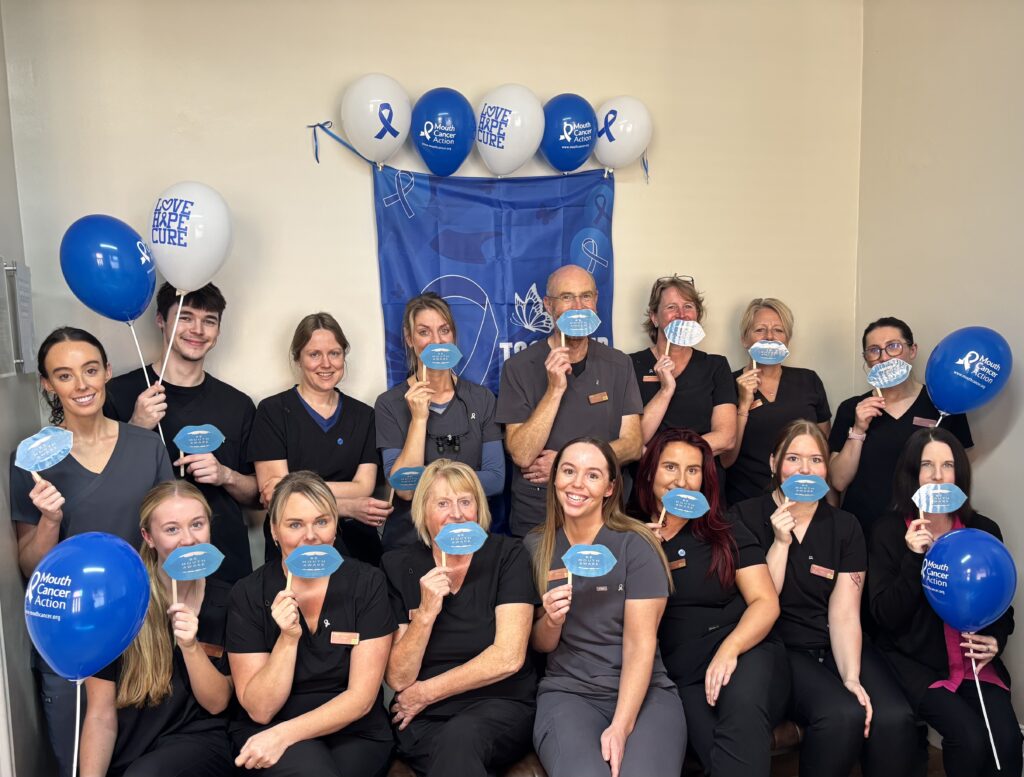
Mouth Cancer Awareness Month at Oswyn House - November 2025
Articles you may be interested in
August 12 2026
Can I Be Sedated for Dental Treatment? A Guide to IV Sedation in Dentistry
If fear is stopping you having dental treatment, you may have wondered: “Can’t you just...
Continue reading
August 5 2026
What Does Dental Sedation Feel Like? Everything Patients Want to Know
If you’re considering sedation because you’re frightened of dental treatment, there’s probably one question above...
Continue reading
July 29 2026
What Actually Happens When You Have a Dental Implant? A Step-by-Step Guide
For many patients, the idea of having a dental implant sounds much more intimidating than...
Continue reading